

 English
  中文简体
中文简体  русский
  Español
  عربى
عربى 
Outdoor Intelligent Switchgear: The Grid Protection That Thinks for Itself
A circuit breaker trips. Somewhere in a substation or at the base of a wind turbine, a fault has interrupted power. Traditional switchgear waits for a technician to arrive, diagnose, and reset. Outdoor intelligent switchgear does not wait. It senses the fault, isolates the affected section, and reroutes power automatically. It communicates its status to a control center. It monitors its own health and predicts failures before they happen. For utilities, renewable energy sites, and industrial plants, intelligent switchgear turns a reactive grid into a self-healing one.
The Brain Inside the Breaker
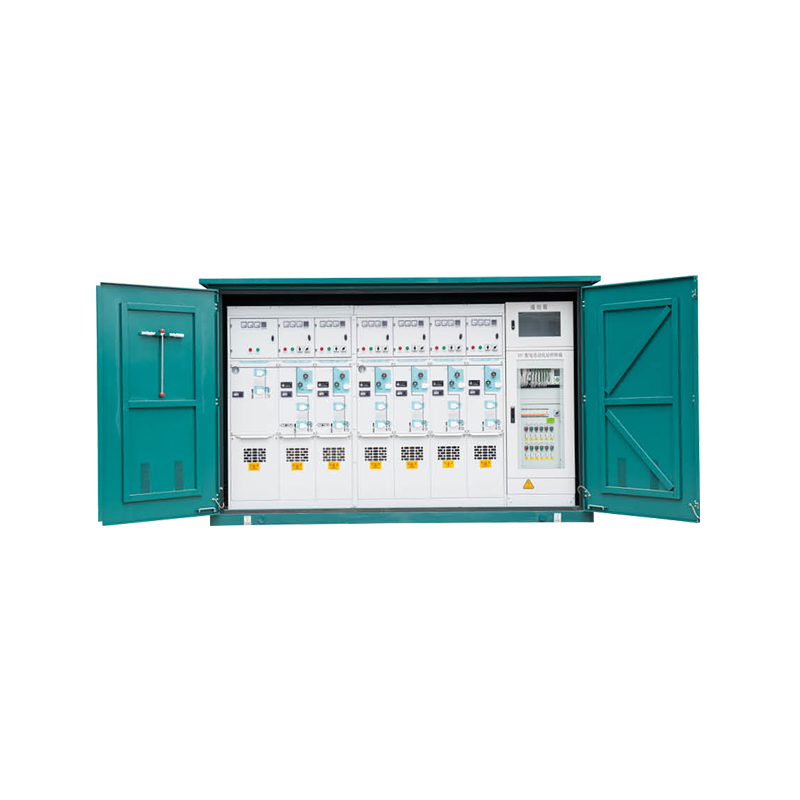
Standard switchgear contains circuit breakers, disconnect switches, and busbars inside a weatherproof enclosure. Intelligent switchgear adds sensors, controllers, and communication modules to every component. A microprocessor-based protection relay monitors current, voltage, and frequency in real time. When a fault occurs, the relay trips the correct breaker and sends a fault record to the operator.
An outdoor intelligent switchgear unit integrates these relays at the factory. The protection settings are configured and tested before the gear ships. The operator does not need to program logic in the field. The switchgear arrives ready to protect.
The communication protocol, typically IEC 61850, Modbus TCP, or DNP3, connects the switchgear to the utility's SCADA system or a cloud-based monitoring platform. An outdoor intelligent switchgear with standardized communication integrates into existing networks without custom gateways.
Monitoring That Prevents the Outage
Traditional switchgear runs until it fails. Intelligent switchgear watches itself. Partial discharge sensors embedded in the busbar compartments listen for the ultrasonic signature of insulation breakdown. The sound of a developing fault is detected weeks before it becomes a flashover. An outdoor intelligent switchgear with PD monitoring schedules maintenance during planned outages.
Thermal sensors on busbar joints and breaker contacts detect loose connections. A hot spot that would eventually arc and trip the breaker is flagged early. Circuit breaker health monitoring tracks mechanical wear: the number of operations, the opening and closing times, and the motor current of the charging mechanism. An outdoor intelligent switchgear with breaker monitoring predicts when a mechanism is about to slow down, stick, or fail.
Environmental sensors track temperature, humidity, and condensation risk inside the enclosure. A heater or dehumidifier turns on automatically to prevent moisture buildup. An outdoor intelligent switchgear manufacturer integrates environmental control so the equipment never operates outside its rated conditions.
Self-Healing When the Fault Hits
When a fault occurs, intelligent switchgear isolates the smallest possible section of the grid. The protection relays communicate with each other and with upstream devices to determine the fault location. The breaker closest to the fault trips. Healthy sections stay energized.
For overhead lines and distribution feeders, auto-reclosing attempts to restore power after a transient fault. A tree branch hits a line, the breaker trips, and a second later the breaker recloses. If the fault has cleared, power stays on. If not, the breaker locks out. An outdoor intelligent switchgear with auto-reclose logic reduces outage duration for the most common type of grid fault.
Load shedding during grid instability keeps critical circuits powered. When frequency or voltage drops, the switchgear drops non-critical loads first, preserving power for essential services. An outdoor intelligent switchgear with load management prevents a cascading blackout.
Here is what outdoor intelligent switchgear needs to deliver:
- Microprocessor-based protection relays factory-configured and tested
- Partial discharge, thermal, and breaker health monitoring sensors
- Environmental control with automated heaters and dehumidifiers
- Standardized communication for SCADA and cloud integration
- Auto-reclose and load shedding logic for grid resilience
Where Intelligence Replaces Truck Rolls
Renewable energy sites, solar farms, wind farms, battery storage, spread across remote areas. Sending a technician to reset a tripped breaker takes hours. An outdoor intelligent switchgear panel that self-resets after a transient fault keeps power flowing without a site visit.
Distribution utilities deploy intelligent switchgear on feeders to reduce outage minutes. The gear isolates the faulted segment and backfeeds healthy sections from alternate sources. An outdoor intelligent switchgear installation on a rural feeder improves reliability metrics without upgrading the entire line.
Industrial plants and data centers use intelligent switchgear for power continuity. A fault in one feeder does not shut down the entire facility. The switchgear isolates the fault and transfers critical loads to alternate sources automatically.
What Fails When the Intelligence Is Added Later
Sensors wired on site instead of at the factory are prone to connection errors and calibration drift. An outdoor intelligent switchgear manufacturer that integrates sensors during assembly tests the entire system before shipment. The communication link drops and the switchgear goes silent. Redundant communication paths and local data logging maintain visibility even when one channel fails.
Protection settings configured in the field are only as good as the technician who programmed them. An outdoor intelligent switchgear with factory-configured and tested settings eliminates the human error that causes misoperations.
Outdoor intelligent switchgear is the grid's immune system. It detects faults, isolates damage, and heals itself. Choose a manufacturer that integrates the intelligence at the factory, monitors for developing failures, and communicates with the grid. The power stays on and the operator knows why. That is the point.
Next
Intelligent Operation and Maintenance of Photovoltaic Prefabricated Cabin Manufacturer: The Brain Inside the Power Station
<p>A solar farm spreads across hectares. Panels track the sun. Inverters convert DC to AC. Bat...
View More


- PRODUCTS
- New Energy Power Distribution Equipment
- Box Type Substation
- Cable Branch Box/Switch Station
- High Voltage Switchgear
- Low Voltage Switchgear
- Engineering Vacuum Circuit Breaker
- New Energy Vehicle Floor Charging Pile
- Commercial Energy Storage
- Photovoltaic Complete Box
- High Voltage Arrester
- INFORMATION
-
-
Phone+86-13868788848
+86-13356188725 -
Tel+86-0577-88810567
-
E-mail
-
AddNo. 59, Youyi Road, Xinguang Industrial Zone, Liushi Town, Yueqing City, Zhejiang, China
-
- ENQUIRE WITH US
Photovoltaic Module Manufacturer

