

 English
  中文简体
中文简体  русский
  Español
  عربى
عربى 
Vacuum Circuit Breaker Applications in Medium-Voltage Systems
The Vacuum Circuit Breaker is a widely adopted switching device in medium-voltage electrical systems where controlled interruption and operational reliability are required. These breakers utilize sealed vacuum interrupters to extinguish arcs during switching events, supporting stable electrical performance across repeated operations in distribution and industrial networks.
Medium-voltage systems typically operate within a range of 3 kV to 36 kV and are commonly found in substations, industrial plants, commercial facilities, and infrastructure projects. Within this range, vacuum circuit breakers are selected for their predictable interruption behavior and mechanical endurance. Many standard designs are rated for more than 20,000 mechanical operations and several thousand full-load electrical interruptions, supporting long service intervals in environments with frequent switching requirements.
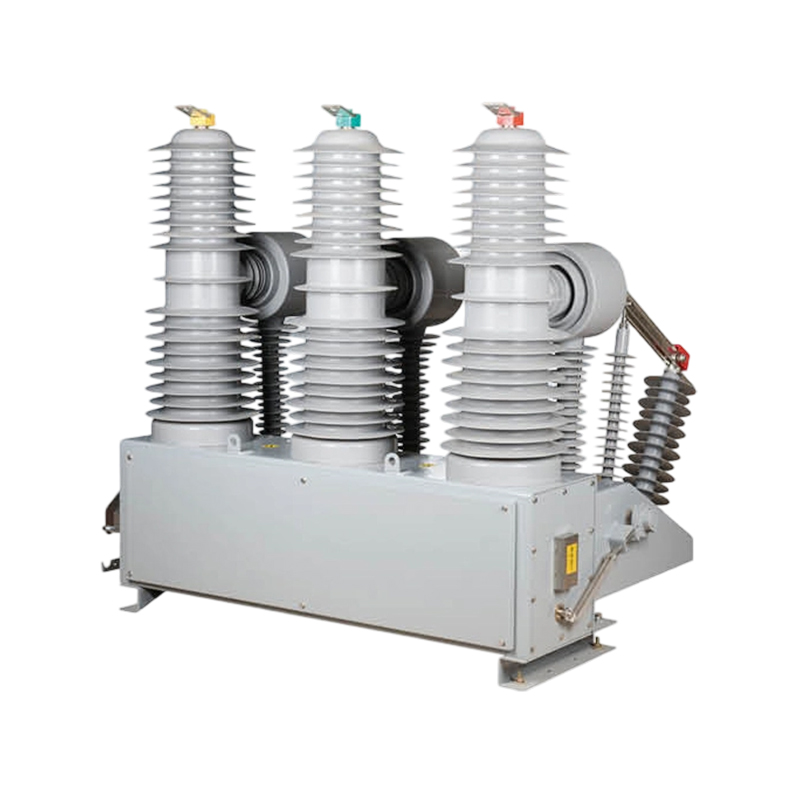
Vacuum-based arc interruption limits contact erosion when compared with air-based switching methods. The absence of oxygen inside the interrupter chamber reduces arc energy and contact degradation. As a result, contact surfaces experience slower wear rates, supporting consistent electrical characteristics such as contact resistance and interrupting capacity over time. During fault conditions, interruption events are typically completed within a few milliseconds, helping to reduce thermal and mechanical stress on conductors, busbars, and connected equipment.
Typical performance characteristics include:
- Sealed vacuum interrupters with stable dielectric strength
- Compact installation within metal-clad or gas-insulated switchgear
- Compatibility with digital protection and monitoring relays
- Lower routine maintenance demands compared to oil-based breakers
From an operational perspective, vacuum circuit breakers are frequently used in systems with rated currents ranging from 630 A to 3,150 A and short-circuit interruption capabilities commonly reaching 25 kA to 40 kA. These parameters allow their application across feeder circuits, motor control centers, and transformer protection schemes.
Maintenance activities generally focus on mechanical linkages, insulation integrity, and control mechanisms rather than consumable replacement. In industrial facilities with frequent switching cycles, operational logs indicate a reduction in unplanned downtime hours after transitioning to vacuum circuit breakers. Predictable mechanical behavior supports structured inspection intervals, often aligned with annual or multi-year maintenance schedules.
Integration with modern protection systems enhances operational visibility. Digital relays connected to vacuum circuit breakers continuously monitor current, voltage, frequency, and fault conditions. This integration enables selective isolation of affected network sections, reducing the impact of faults on surrounding equipment and downstream loads.
Environmental and handling considerations also influence equipment selection. Vacuum circuit breakers do not rely on insulating oil during operation, which simplifies transportation, installation, and end-of-life handling. Their dimensions support space-efficient substation layouts, particularly in indoor or prefabricated electrical rooms where floor space is limited.
In summary, the Vacuum Circuit Breaker supports medium-voltage system stability through controlled arc interruption, mechanical durability, and compatibility with digital protection schemes. Its characteristics, operational consistency, and integration capabilities make it a practical solution across a wide range of medium-voltage applications.
FAQs
What voltage levels use vacuum circuit breakers?
They are commonly applied in medium-voltage systems ranging from 3 kV to 36 kV.
How often is maintenance required?
Maintenance is typically less frequent than oil-based alternatives and focuses on mechanical inspection.
Are vacuum circuit breakers suitable for indoor switchgear?
Yes, sealed interrupters support enclosed and metal-clad installations.
Do they work with digital protection systems?
Yes, they are commonly integrated with modern digital relays for monitoring and protection.
Next
Stainless Steel Cable Junction Box With Fault Indicator in Power Distribution
<p>A <a href="/product/"><strong>Stainless Steel Cable <strong style=...
View More


- PRODUCTS
- New Energy Power Distribution Equipment
- Box Type Substation
- Cable Branch Box/Switch Station
- High Voltage Switchgear
- Low Voltage Switchgear
- Engineering Vacuum Circuit Breaker
- New Energy Vehicle Floor Charging Pile
- Commercial Energy Storage
- Photovoltaic Complete Box
- High Voltage Arrester
- INFORMATION
-
-
Phone+86-13868788848
+86-13356188725 -
Tel+86-0577-88810567
-
E-mail
-
AddNo. 59, Youyi Road, Xinguang Industrial Zone, Liushi Town, Yueqing City, Zhejiang, China
-
- ENQUIRE WITH US
Photovoltaic Module Manufacturer

