

 English
  中文简体
中文简体  русский
  Español
  عربى
عربى 
Combined American Prefabricated Substation: Compact Power Distribution Solution
The combined American prefabricated substation has become a widely adopted power distribution solution for industrial facilities, commercial complexes, and utility networks requiring reliable, compact, and rapidly deployable electrical infrastructure. This pre-engineered substation integrates transformers, switchgear, and auxiliary equipment into a single weatherproof enclosure, significantly reducing installation time and site work compared to traditional stick-built substations. Recent industry data indicates that prefabricated substations have gained substantial market share due to their space-saving footprint, factory-tested reliability, and lower total installed cost.
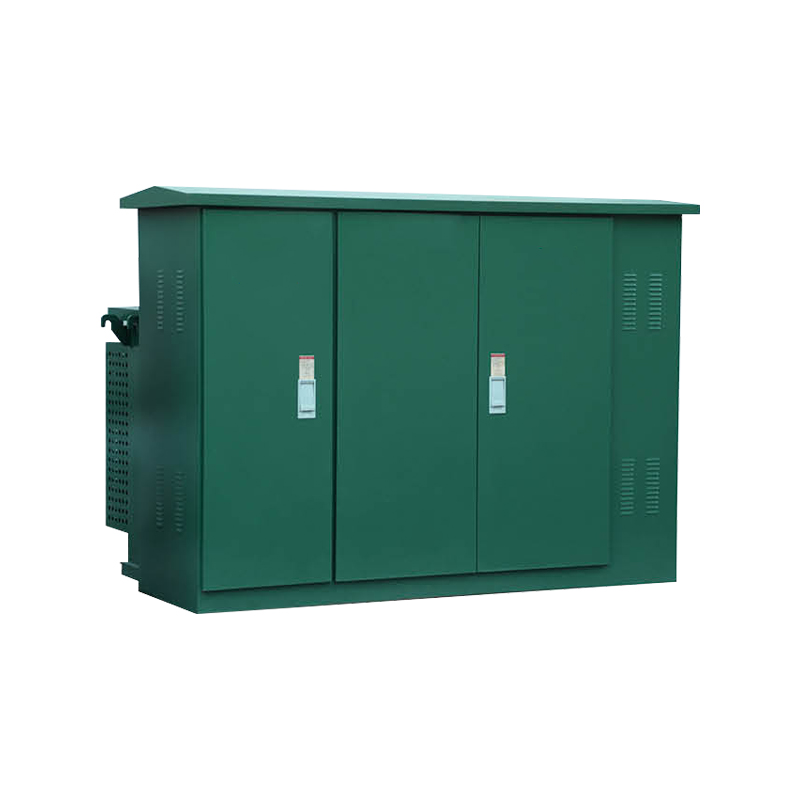
Three-Compartment Layout and Equipment Integration
The combined American prefabricated substation features a three-compartment layout that houses the high-voltage switchgear, transformer, and low-voltage distribution equipment within a single enclosure. The high-voltage compartment contains the incoming feeder circuit breaker or fused disconnect switch, along with surge arresters, metering equipment, and protective relays. The transformer compartment accommodates the main power transformer, which steps down the incoming voltage to the required utilization level, with the transformer typically liquid-filled for enhanced cooling and overload capacity. The low-voltage compartment houses the main circuit breaker, distribution feeders, and control equipment for the downstream network.
The compact arrangement optimizes space utilization, with some designs incorporating vertical stacking of components to further reduce the footprint. The internal layout prioritizes safe access for operation and maintenance, with clearly marked compartments and interlocking mechanisms to prevent unauthorized entry. The substation is designed for both indoor and outdoor installation, with appropriate weatherproofing for external applications. The equipment is fully interconnected and tested as a complete system before shipment.
Factory Fabrication and Installation Efficiency
The combined American prefabricated substation offers significant advantages over conventional site-built substations. The factory fabrication process ensures consistent build quality and eliminates weather-related delays that commonly affect on-site construction projects. The substation is fully assembled, wired, and tested before shipment, reducing the risk of installation errors and commissioning issues. On-site installation involves preparing a foundation, positioning the substation, making cable connections, and completing final testing, which typically requires only a few days rather than the weeks or months needed for traditional substations.
The factory testing includes dielectric withstand tests, partial discharge measurements, and functional tests of all protective relays and control systems. This comprehensive testing ensures reliable operation from the first day of service. The prefabricated enclosure eliminates the need for separate equipment shelters or buildings, further reducing project costs and construction duration. The modular design also facilitates future expansion, as additional sections can be added with small disruption to existing operations.
Cooling System and Thermal Management
The combined American prefabricated substation incorporates a cooling system designed to maintain safe operating temperatures under continuous load and ambient temperature bad. The transformer is equipped with radiators or cooling fins that dissipate heat through natural convection, with the enclosure designed with ventilation louvers and fans to remove heat from the compartments without allowing moisture or contaminants to enter. The cooling system is sized to maintain the transformer's rated capacity while small thermal stress on the insulation system.
The cooling system includes:
- Temperature sensors that monitor oil and winding temperatures;
- Automatic cooling controls that activate fans when temperatures exceed setpoints;
- Over-temperature alarms and automatic shutdown for protection;
- Provisions for future upgrade to forced-air cooling if load increases.
The cooling system is designed for reliability, with redundant fans and components where required, ensuring continued operation even if one cooling element fails.
Safety Features and Selection Criteria
The combined American prefabricated substation includes comprehensive safety features to protect personnel and equipment. The enclosure is designed to prevent unauthorized access, with locked doors and interlocks on all compartments. The transformer is equipped with pressure relief devices and temperature sensors that automatically shut down the unit in case of abnormal conditions. Key safety features include spill containment systems for transformer oil, weatherproof enclosure design, seismic-resistant construction, and internal arc fault containment.
When selecting a combined American prefabricated substation, buyers evaluate the transformer rating for power demand and future expansion, voltage ratings for compatibility with utility supply and distribution, enclosure type and environmental protection for site conditions, and cooling system capacity for ambient temperature requirements. Buyers also consider compliance with relevant standards such as IEEE and ANSI, the availability of spare parts and service support, and the manufacturer's reputation for reliability. Proper selection ensures reliable and efficient power distribution while small lifecycle costs.
Next
New Energy Storage Photovoltaic Cabin Factory: The Box That Has to Work When the Grid Doesn't
<p>A photovoltaic cabin is not a shipping container with some batteries bolted in. It's a pref...
View More


- PRODUCTS
- New Energy Power Distribution Equipment
- Box Type Substation
- Cable Branch Box/Switch Station
- High Voltage Switchgear
- Low Voltage Switchgear
- Engineering Vacuum Circuit Breaker
- New Energy Vehicle Floor Charging Pile
- Commercial Energy Storage
- Photovoltaic Complete Box
- High Voltage Arrester
- INFORMATION
-
-
Phone+86-13868788848
+86-13356188725 -
Tel+86-0577-88810567
-
E-mail
-
AddNo. 59, Youyi Road, Xinguang Industrial Zone, Liushi Town, Yueqing City, Zhejiang, China
-
- ENQUIRE WITH US
Photovoltaic Module Manufacturer

